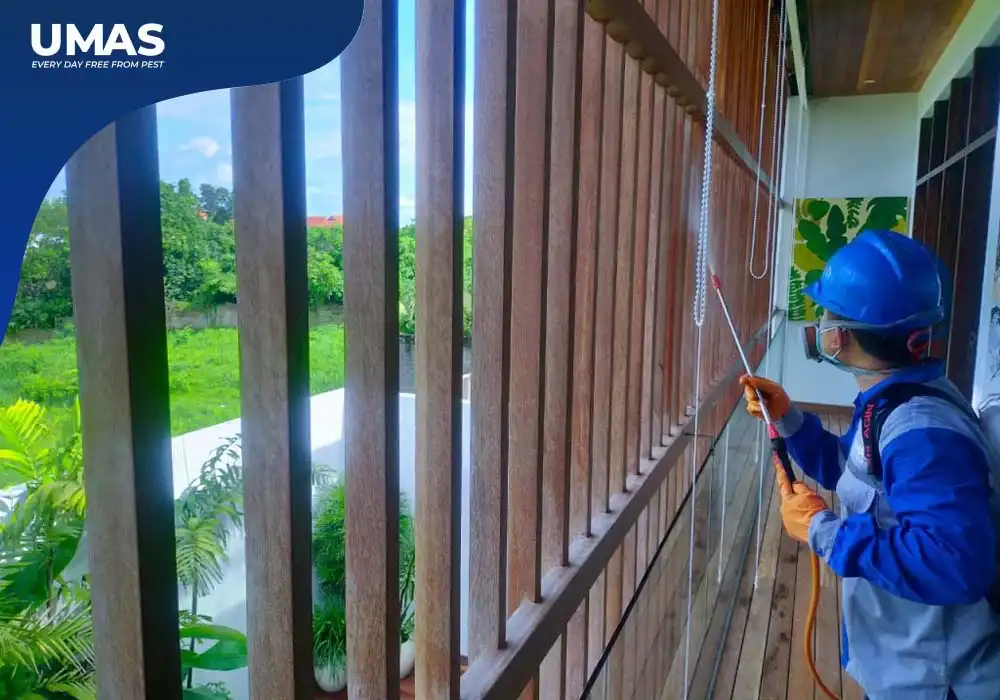
20 Best Ideas For Choosing Anti-Termite Control Services In Jakarta
Termite control strategies for Java IndonesiaThe phrase "island-wide exclusion" is a reference to infrastructure-scale ambition but for Jakarta anti-termite and pest control, it's actually a forensic discipline borrowed from biogeography. The city of Jakarta is a biogeographic sand island each structure is surrounded by paved fill, utility trenches, and compacted fill. The same way termites were selected for recolonization of Krakatau in 1883, we determine whether the Coptotermes can cross a five meter concrete driveway and get to Menteng homes. Exclusion is not about poisoning every termite living in Jakarta. The engineering conditions must be in place to make crossing impossible.
1. Sterilization is always better than poisoning
Quarantine is the only method that has been proven to be efficient in eliminating an entire island. For Jakarta homes, this refers to heating treatment of the damaged timber that was removed during renovation. The colony is not removed by cutting down infested timber and then dumping it in landfills. Instead it releases colonization boats into the waste stream. All affected materials should be incinerated or fired in a kiln by professional exterminators on site.
2. Exclusion zones can be created by soil chemistry
In some Indonesian island soils, soils that are acidic or nutrient poor prevent termites from eating the soil. Jakarta anti-termite can recreate the same situation at an individual level. Modification of pH beneath slabs, and around foundation perimeters (using buffered acid or agricultural sulfur) results in substrates that termites that grow fungus will not tunnel into. The soil doesn't have to be to be toxic. It just needs to have an unfriendly environment.
3. Connectivity is the lifeline of the Colony
Subterranean termites do not invade as separate species. They are one superorganism that is distributed throughout the foraging tunnels. Severing landscape connectivity--removing wooden fences that contact soil, replacing organic mulch with river stone, eliminating brush piles and timber debris--fragments the colony into isolated pockets that eventually starve. The boundary of the property is where the island-wide ban starts, not at the wall of the foundation.
4. Macrotermitinae can't cross the pavement
For their symbiotic garden, fungus-loving Termites (Macrotermes Microtermes, Odontotermes ) need to be in close contact with the soil. Unlike Coptotermes that build underground tubes of protection that span concrete for years, fungus-growers are unable to build satellite nests inside planter boxes, or in elevated planters. The continuous barrier of vapor under the entire structure excludes the entire feeding group permanently.
5. Tanjung Port Port is Jakarta's Achilles Heel
Infested lumber that is not from zones of quarantine cannot be excluded. Shipping pallets, decorative crates, furniture made from reclaimed wood and landscaping materials imported from abroad are brought into Jakarta each day via Tanjung Priok with Coptotermes gestroi and Nasutitermes colonies. After treatment, anti-termite service must be inspected on all wooden items that are brought into the premises.
6. Wood species are exclusions to from infrastructure
Jakarta's local timber supply is mostly Acaciamangium, Paraserianthes, falcataria and Heveabrasiliensis. Each of these species has a low durability and are attracted to subterranean wood termites. It's like placing bait stations in the form of architecture by naming these species for door frames, window jambs, and structural repairs. In order to exclude species that are prohibited, lists of species should be included in the construction contracts.
7. The Foraging Highways Must be prepared for moisture gradients
Termites do not construct mud tubes for the construction process, but rather because their cuticles dry when relative humidity falls less than 70 percent. The water gradient that is created by any evaporative surfaces like dripping hoses poorly graded plant beds, or leaky condensate pipe for the air conditioner, is a powerful attractant. The exclusion process fails if moisture audits are omitted from preventive inspections.
8. Above-Ground colonies signify a the perimeter breach
When Coptotermes gestroi constructs nests of cartons within wall cavities or roof spaces the colony has reached the true island colonization. Colonies can survive for years without soil access. If pest control workers find an aerial nest, they must treat the structure like a fully-invaded island and require total enclosure fumigation or heat elimination of the entire structure.
9. Baiting Is Surveillance, Not Exclusion
The perimeter bait stations are not effective in excluding termites. In the best case, they eliminate colonies which forage range includes them. They serve as supplemental feeding sites that help to sustain colonies during dry periods that occur. Physical barriers such as stainless steel mesh, graded sand and stone, or polymer-coated membranes are necessary to attain true elimination. They may be installed either during construction, or later, after excavation all around.
10. The 1.6-Million House Precedent
Dutch colonial authorities restored or renovated more than 1.6 Million Javanese dwellings between 1911-1942 in the effort to rid the city of plague-infested construction made of bamboo. The campaign succeeded on an epidemic level but was not a success culturally. Bamboo had been banned as was the traditional housing stock destroyed and vernacular culture was wiped out. Jakarta anti-termites of today should remember the exclusion imposed by force is perceived as an attempt to erase. Strategies to exclude homeowners that they understand and voluntarily adhere to are the most durable.
Conclusion
It is not possible to exclude termites on an island by using chemical schedules. Exclusion is achieved through manipulating habitats, in quarantining materials, installing physical barriers and deliberately engineering soil chemistry so that it is inhospitable. The Krakatau eruption demonstrated that complete sterilization, followed by strict quarantine results in century-scale suppression. Jakarta's antitermite services might not be able reproduce the destruction caused by volcanic eruptions in Indonesia but they're able to apply all the other lessons in island biogeography. Termites move across the water using floating timber. Termites cross the pavement using concrete edges. They cross boundaries of property using organic mulch. Exclusion is a practice that involves eliminating all vessels. Check out the most popular jasa anti rayap for more advice including jasa anti rayap tangerang, jasa pembasmi rayap, jasa basmi hama, cara membasmi rayap di lemari, pintu anti rayap, kitchen set anti rayap, kayu tahan rayap, rayap rumah, cara basmi rayap, jasa anti rayap and more.

Jakarta Indonesia Has A Tropical Climate, With A Constant Threat Of Termites.
Pest control franchises operating in temperate regions ship equipment, chemical formulations and training guides to Jakarta and then discover that, after 18 months, nothing is working. This is not due to the fact that the products are not working. It's due to the fact that tropical urban climates undermine the assumptions underlying these products. Jakarta's pests do not cease feeding during winter months simply because it does not have a winter. Because of Jakarta's warm, humid soils all through the season, termiticides utilized in soils exhibit an unprecedented rate of hydrolysis previously in Ohio or Osaka. Menteng is an extremely humid area and the humidity higher than 80 percent impacts the taste of bait. Anti-termite services that view Jakarta as the tropical version of a market that is temperate will have suboptimal results. Jakarta isn't an exact copy of any other location. It is an entirely separate operational environment.
1. Zero Foraging Downtime, 365 Days
Temperate termites stop foraging when soil temperatures fall below 15 degrees Celsius. Coptotermesgestroiand Microtermesinsperatus can still forage at all temperatures in Jakarta regardless of seasonal or diurnal fluctuations. There is no window for treatment during the season. There is no safe month to make remodeling. Colony elimination protocols must assume continuous feeding pressure 366 days a year.
2. Humidity Exceeds Cuticle Limit
Termite cuticles desiccate below seventy percent relative humidity. The humidity in Jakarta's dry season ranges from seventy-five to eighty percent. The humidity during the wet season can reach 90%. The termites are not only tolerant of these conditions, they must constantly forage as their water balance requires frequent replenishment. Continuous threat isn't just hyperbole.
3. Chemical Half-Life contracts for months
The rate of hydrolysis increases with temperatures and moisture. In Jakarta the effectiveness of a soil termiticide that lasts 6 months in Hiroshima is only three or four months. The anti-termite service that offers a twelve-month warranty on liquid barrier treatments is either over-concentrating the application, misrepresenting remaining life, or considering reapplications that are predictable as a business expense.
4. Silty Clay is used as infrastructure for colony building
The predominant type of Jakarta's soil - compacted silty - - holds moisture in amounts that attract subterranean pests. When soil moisture content exceeds 22 percent, termites won't be able to live in the area. They will colonize the soil. Exterminators that apply chemicals without first determining soil moisture treat symptoms, but leave habitat conditions unaltered.
5. Preferred Wood species are defaults for construction
Coptotermes curvignathus prefers the wood species of mangium, pine and lighter red Meranti. The wood species are utilized in the middle class housing market in Jakarta to frame. Merbau and teak are both resistant to feeding but cost between two and three times the price. The Jakarta construction market has chosen for wood that termites like.
6. Fungus-Growers Dominate, Coptotermes Destroys
Jakarta's termite assemblage is numerically dominated by Microtermes insperatus and Macrotermes gilvus--Termitidae-family fungus-growers that require soil contact and organic debris. Coptotermes gestroi is a less well-known termite species causes structural damage that is not proportional. Through focusing their marketing only on Coptotermes they misrepresent Jakarta’s composition of species.
7. Green Space Acts as Colony Reservoirs
Jakarta's remaining urban forest patches as well as cemetery groves and unmaintained railway corridors support parent colonies that radiate foraging tunnels that connect adjacent residential blocks. The nine Hazard-Class One subdistricts in Jakarta share a similar characteristic: there is still lots of forest. These zones aren't able to be protected by the use of property line treatments. In order to suppress colony expansion at the neighborhood level, baiting must be integrated across several properties.
8. Construction Activity manufactures Home
Urbanization in Jakarta does not remove termite habitat, but it provides a unique habitats. Imported soil, irrigation and construction materials that are buried create the perfect conditions for the development of colonies. A newly constructed housing development in BSD also known as Bekasi is not a pest-free environment. The termite colony is established at the time the first tree was planted.
9. Imported Timber is used to bypass Quarantine
Tanjung Priok has been a significant containerized shipping hub for termites. In addition, the city exports infested products like pallets to ports in moderate climates. This bidirectional movement ensures that the colony's strength isn't weakened by isolation. The arrival every month of container ships in Jakarta adds to the termite burden.
10. Climate Migration Increases the Number of Source Population
Termite species that reside in lowland habitats can flourish as global temperatures rise. Parent colonies, which were at higher elevations in warmer years, survive mild winters. This allows them to extend their foraging range. Jakarta isn't just being threatened by local colonies. Jakarta isn't only being targeted by local colonies, but also by a growing population moving out of cooler refugee areas.
Also, you can read our conclusion.
This isn't marketing jargon. It's a technical specification. Jakarta anti-termite treatment services must calibrate application rates of the chemicals to accelerate decay, set up bait stations for year-round use, measure the soil moisture before every treatment and differentiate between structurally destructive Coptotermes and numerically dominant Coptotermes. Markets don't reward businesses that complain about tough conditions. It rewards those who modify protocols in response to changing conditions and document the outcomes. Jakarta's climate is not just a reason to avoid treatment failure. It is this variable which differentiates specialist exterminators from generalists who use protocols sourced from other countries. Homeowners should be able to discern the distinction between the two kinds. They show this distinction by their willingness to pay premium prices for the latter as well as their inability to renew contracts with the former. View the top rated anti rayap jakarta for website advice including rayap lemari, pest control harga, kayu tahan rayap, jasa anti rayap tangerang, rayap lemari, rayap kecil, kayu anti rayap, cara basmi rayap, jasa pest control, pembasmi hama and more.